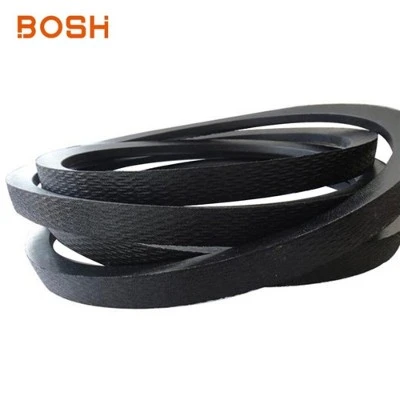
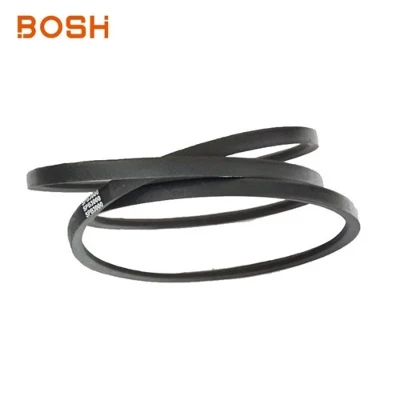
Transmission belts are exposed to a combination of tensile loads, repeated bending, surface friction and changing environmental conditions during normal operation. Wrapped belts address these demands through a composite construction in which different materials perform specific functions. This multi-layer approach allows the belt to balance power transmission capability, surface protection and long-term durability.
The most distinctive structural feature of a wrapped belt is its external fabric covering. The covering is typically made from a textile material with suitable strength and wear resistance and is applied around the belt body. It forms a protective outer surface that can withstand part of the friction generated when the belt contacts pulleys or other mechanical components. The textile must also remain sufficiently flexible to follow the belt as it bends during operation.
Beneath the fabric covering is the main rubber body. This layer provides the elasticity and flexibility required for continuous movement around pulleys while helping maintain the overall shape of the belt. The rubber body also serves as the primary medium connecting the external covering with the internal reinforcement, creating an integrated belt structure.
An internal reinforcement layer is commonly incorporated into the belt construction. High-strength reinforcing materials are used to carry the primary tensile loads generated during operation. The position, arrangement and bonding of the reinforcement can influence the belt's load capacity, dimensional stability and resistance to elongation.
The individual layers of a wrapped belt are designed to work together rather than operate independently. The outer fabric provides surface protection and forms the primary contact interface, the rubber body supplies flexibility and structural support, and the internal reinforcement carries much of the tensile load. Maintaining strong adhesion between these layers is essential for preserving structural integrity during repeated bending and continuous operation.
The surface characteristics of the covering can also be adapted to different applications. Fabric weave, thickness and surface treatment can influence the friction characteristics between the belt and surrounding components. Manufacturers can select different textile constructions and processing methods according to the operating requirements of the target equipment.
Edge areas and covering joints are also important aspects of belt construction. During manufacturing, the fabric needs to remain securely integrated with the belt body without excessive wrinkles, looseness or localized defects. Consistent covering quality helps maintain the integrity of the outer surface as the belt repeatedly travels around the drive system.
Overall, a wrapped belt is a composite transmission component built from an external textile covering, a rubber body and internal reinforcement. Its construction is based on the coordinated performance of different materials, allowing the belt to combine flexibility with load-carrying capability and surface protection.
As equipment manufacturers continue to demand greater reliability from mechanical transmission systems, multi-layer construction will remain an important area of development for wrapped belts. Improvements in textile materials, rubber compounds, reinforcement and bonding technology can further enhance durability and support stable belt performance in demanding applications.