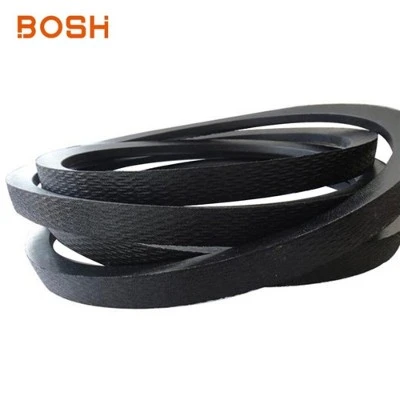
Reliable power transmission is essential for modern machinery, allowing energy from a drive source to reach the components responsible for performing useful work. Multi-ribbed belts serve as an important flexible transmission component in many mechanical systems, providing dependable power transfer while also supporting multiple accessory drives and compact system layouts.
The primary function of a multi-ribbed belt is to transfer rotational power from a driving pulley to one or more driven pulleys. As the drive pulley rotates, friction between the belt ribs and pulley grooves enables power to move through the belt system. Compared with rigid transmission arrangements, belt drives offer greater flexibility in system layout and can help accommodate differences in pulley spacing while providing a degree of vibration absorption during operation.
Another important function is the ability to drive multiple accessories with a single belt. In automotive accessory drive systems, one multi-ribbed belt can be routed around several pulleys to transfer engine power to components such as alternators, water pumps and air-conditioning compressors. A properly designed pulley arrangement can reduce the need for separate drive systems and contribute to a more compact overall configuration.
Multi-ribbed belts can also help optimize the available installation space. Their flexible construction allows them to operate around relatively small pulleys and follow carefully designed routing paths. This makes it possible to connect several components within a confined area without requiring a large transmission assembly. Such flexibility is particularly valuable in modern engine compartments and compact mechanical equipment, where available space is often limited.
Smooth power transmission is another useful function of a multi-ribbed belt. Multiple ribs engage with the pulley simultaneously, creating continuous contact across the working surface. When the belt, pulley and tensioning system are properly matched, this configuration can support stable power transfer and consistent operation.
The flexible nature of a belt drive can also provide a degree of shock and vibration absorption. During equipment start-up, shutdown or changes in operating load, the belt can accommodate certain dynamic effects within the transmission system. This can help reduce the impact of sudden load changes on other mechanical components.
Overall, multi-ribbed belts perform more than a simple power transmission role. They can connect multiple driven components, support compact drive layouts, promote smooth operation and provide a degree of flexibility within the transmission system. Selecting the appropriate belt specification and maintaining correct tension and pulley alignment are essential for achieving reliable performance and maximizing service life.
As machinery continues to demand more compact and efficient drive solutions, multi-ribbed belts will remain a practical choice for a wide range of automotive, agricultural and industrial power transmission systems.