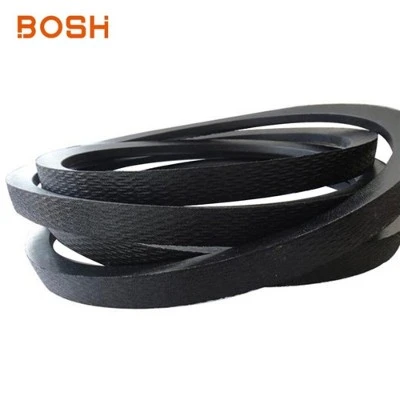
As automotive, agricultural and industrial equipment continues to demand more efficient power transmission and better use of available space, multi-ribbed belts have evolved into a range of configurations designed for different operating requirements. Variations in transmitted power, rotational speed, installation space and working conditions all influence the type of belt that should be selected for a particular drive system.
Among the commonly used belt profiles, the PK profile is particularly prevalent in automotive applications. PK belts are available in different rib counts and effective lengths, allowing them to accommodate a wide range of pulley arrangements and accessory drive systems. They are widely used in passenger vehicles, commercial vehicles and selected machinery applications where compact and reliable accessory drives are required.
Multi-ribbed belts can also be distinguished by their construction and installation method. Endless multi-ribbed belts are manufactured as continuous loops and are installed directly around the pulley system. This configuration is commonly used in automotive accessory drives and conventional mechanical transmission systems. Open-ended versions are available for certain specialized applications where the belt length needs to be adjusted or the belt must be installed without removing the surrounding components.
The back-side design can also vary depending on the requirements of the drive system. Some multi-ribbed belts have a smooth back surface and rely primarily on the ribbed side for power transmission. Other designs are suitable for systems where the back of the belt comes into contact with tensioners or additional pulleys. This type of configuration can provide greater flexibility when a single belt needs to follow a more complex routing path.
Multi-ribbed belts can also be categorized according to their intended application. Automotive belts are generally designed with requirements such as compact installation, stable operation and resistance to temperature changes in mind. Belts used in agricultural and industrial machinery may need to accommodate higher loads, longer operating cycles, dust, vibration or other demanding environmental conditions.
Selecting the right multi-ribbed belt requires more than simply matching the overall belt length. Important factors include the belt profile, rib count, effective length, pulley dimensions, transmitted power, operating speed and working environment. The belt must also be compatible with the pulley grooves and tensioning system to ensure proper engagement and reliable operation.
As machinery becomes increasingly specialized and compact, the range of multi-ribbed belt designs and applications is expected to continue developing. Choosing a belt configuration that matches the specific requirements of the drive system can improve transmission stability, reduce unnecessary wear and support dependable long-term equipment operation.